
The Complete Guide to Kedarkantha Trek
Snow peaks, alpine meadows, and a summit that stays with you forever.
01
Introduction to Kedarkantha Trek
What makes it special among Indian treks?
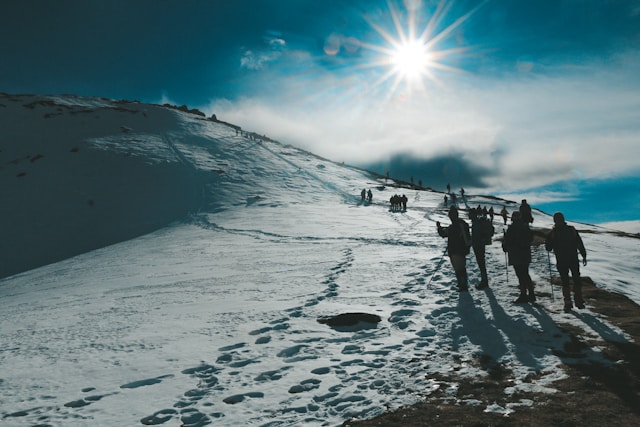
Kedarkantha stands apart from the dozens of Himalayan treks not because of its sheer altitude, but because of what it offers at every step. At 12,500 feet, the summit rewards trekkers with a sweeping 360° panorama of peaks — Swargarohini, Bandarpunch, Kala Nag, and Black Peak — arranged in a dramatic arc that few other trails in India can match. Add to that a trail that passes through dense oak and pine forests, meadows carpeted with snow in winter, and charming shepherd villages, and you have a trek that genuinely earns its reputation as one of India's finest.
What makes it special among Indian treks?
Why it's perfect for beginners
Kedarkantha is widely regarded as the ideal "first Himalayan trek" for very good reason. The trail is well-defined, the altitude gain is gradual enough to allow acclimatisation, and the total distance of roughly 20 km is achievable over four comfortable days. There are no exposed ridges or technical climbing sections. Each campsite is established and safe, and rescue routes are accessible. For someone stepping into the Himalayas for the first time, Kedarkantha offers all the magic of a high-altitude summit without the intimidating demands of harder routes.
Quick overview of the route
The trek begins at Sankri village in Uttarkashi district, reached by road from Dehradun. From Sankri, the trail ascends through Juda Ka Talab — a frozen lake in winter — before pushing through the ridge to the base camp at around 11,250 feet. The final summit push typically starts before dawn, and most trekkers reach the top by mid-morning. The descent retraces the route back to Sankri, usually completed in a day.
Quick fact
The base village Sankri sits at 6,400 feet and is roughly 200 km from Dehradun — about a 7–8 hour drive through scenic mountain roads.
02
Kedarkantha Trek Difficulty Level
Grade: Easy to Moderate
Trek organisers consistently rate Kedarkantha as easy to moderate. This means the trail is physically demanding enough to be meaningful — you will feel it in your legs and lungs — but it does not require prior mountaineering experience or specialised gear. Most reasonably active adults with some preparation can complete it. The summit day is the most challenging segment, involving a steep push of about 1,500 feet in a few hours, often in cold early-morning conditions.
Altitude gained per day
The trek spans four days and gains altitude at a sensible pace. From Sankri (6,400 ft) the first camp at Juda Ka Talab sits at roughly 9,100 ft — a gain of about 2,700 feet. The second camp is near the base camp at around 11,250 ft, adding another 2,150 feet. The summit at 12,500 ft is the final climb of around 1,250 feet. This gradual ascent profile is precisely why the trek is considered beginner-friendly — your body has time to adjust at each stage.
Fitness tips before you go
Begin preparing at least six to eight weeks before your trek. Focus on cardiovascular endurance — daily runs, brisk walks, cycling, or swimming. Stair climbing is particularly useful as it mimics the uphill demands of the trail. Building leg strength through squats and lunges will also serve you well on the descent. If you can, carry a loaded backpack during training walks to simulate actual trekking conditions. On the trek itself, keep your pace slow and steady — the mountain rewards patience far more than speed.
Fitness tip
Even if you are not a regular gym-goer, three to four weeks of daily 45-minute brisk walks with a light backpack is enough to prepare most beginners for this trek.
Is it suitable for kids or seniors?
Kedarkantha has been completed successfully by children as young as 10 and adults well into their 60s. However, suitability depends more on individual health and fitness than age alone. Children should be comfortable walking 8–10 km per day on uneven ground. Seniors should consult a doctor beforehand, particularly if they have any cardiac or respiratory conditions. The cold temperatures, especially on summit day, add an additional consideration for anyone with reduced cold tolerance. With proper preparation and a good trekking operator, it is absolutely doable for both groups.
03
Best Time to Do Kedarkantha Trek
Winter · Dec–Feb
Deep snow, dramatic views, true winter magic
Summer · Apr–May
Green meadows, mild weather, wildflowers
Monsoon · Jul–Sep
Avoid — slippery trails, landslide risk
Winter season (Dec–Feb) — the snow experience
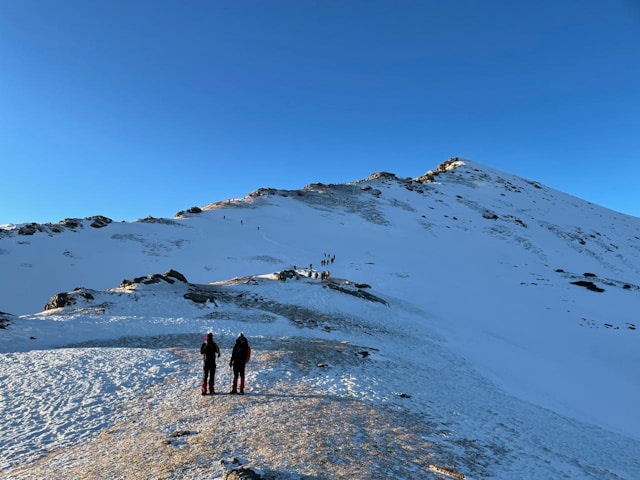
This is Kedarkantha at its most iconic. The entire trail is blanketed in thick snow, the frozen Juda Ka Talab is a surreal sight, and the campfire evenings feel genuinely adventurous. Temperatures at base camp drop to -10°C and below at night, and the summit push in the pre-dawn darkness is cold and exhilarating. December and January are the peak season for good reason — clear skies, pristine white landscapes, and the full drama of a winter Himalayan summit. Come prepared with quality thermals, a sleeping bag rated to -15°C, and waterproof trekking boots.
Summer season (Apr–May) — green meadows
As the snow retreats in spring, Kedarkantha transforms into something entirely different but equally beautiful. The meadows burst into lush green, wildflowers appear along the trail, and the views of the high peaks are sharp against clear blue skies. Temperatures are mild and comfortable — ideal for trekkers who want the Himalayan experience without the extreme cold. The trail is less crowded than in winter, the days are longer, and the overall experience is more relaxed. This is the best season for photography and for families with young children or older members.
Monsoon — why to avoid
The monsoon season from July through September brings heavy rainfall to the Kedarkantha region. The trails become slippery and muddy, leeches are a persistent nuisance, and the risk of landslides on the access road increases significantly. Cloud cover typically obscures the mountain views that make the summit rewarding. Most reputable trek operators suspend Kedarkantha operations during this period. If you find yourself in Uttarakhand during monsoon season, it is strongly advisable to wait for the skies to clear rather than pushing ahead.
Best overall window
For most first-time trekkers, the December–January window offers the quintessential Kedarkantha experience. Book at least 4–6 weeks in advance as slots fill quickly during peak season.
04
Complete Cost Breakdown
Trek operator fees
₹7,000 – ₹12,000
Gear rental (approx)
₹500 – ₹1,500
Delhi → Sankri travel
₹800 – ₹2,500
Total estimated budget
₹9,000 – ₹16,000
Trek operator fees (₹7,000–₹12,000)
Registered trek operators charge between ₹7,000 and ₹12,000 per person for a fully guided Kedarkantha package. This typically includes accommodation in tents or guesthouses, all meals on the trail, a certified guide, a support team, and basic safety equipment. Always choose an operator registered with the Uttarakhand Tourism Department and check their safety record before booking. Paying slightly more for a reputable operator is one of the most worthwhile investments you can make for this trek.
Travel: Delhi to Sankri by bus/train
The most common route is an overnight train from Delhi to Dehradun (Shatabdi, Jan Shatabdi, or Mussoorie Express) followed by a shared cab or bus to Sankri. Train tickets cost ₹300–₹800 depending on class, and the Sankri cab costs ₹600–₹800 per person in a shared vehicle. Some operators offer pickup from Dehradun railway station as part of their package. If you prefer door-to-door comfort, private taxis from Delhi to Sankri can be arranged for ₹8,000–₹12,000 per cab, split among four people.
Gear rental costs
If you don't own trekking gear, Sankri village has several small shops that rent out essentials at reasonable rates. Trekking poles rent for around ₹100–₹150 per day, gaiters for ₹50–₹100 per day, and microspikes or crampons for ₹100–₹200 per day in winter. Sleeping bags and jackets are also available. Renting a full winter kit for four days should cost ₹500–₹1,500 depending on what you need. Inspect rented gear carefully before heading out.
Budget vs. premium packages
Budget packages around ₹7,000–₹8,000 typically use basic dome tents, sleeping bags with modest insulation ratings, and minimal support staff. Premium packages at ₹10,000–₹12,000 offer insulated sleeping tents, higher-rated sleeping bags, better food, smaller group sizes, and more experienced guides. For winter treks especially, the difference in sleeping bag quality alone makes the premium package worth considering. First-time trekkers are better served by a more comfortable, well-supported experience than by saving a few thousand rupees.
Sleeping bags and jackets are also available. Renting a full winter kit for four days should cost ₹500–₹1,500 depending on what you need. Inspect rented gear carefully before heading out.
Budget tip
Book at least 6 weeks in advance to get early-bird rates. Many operators offer 10–15% discounts for groups of 4 or more trekking together.
05
Kedarkantha Trek Itinerary (Day-by-Day)
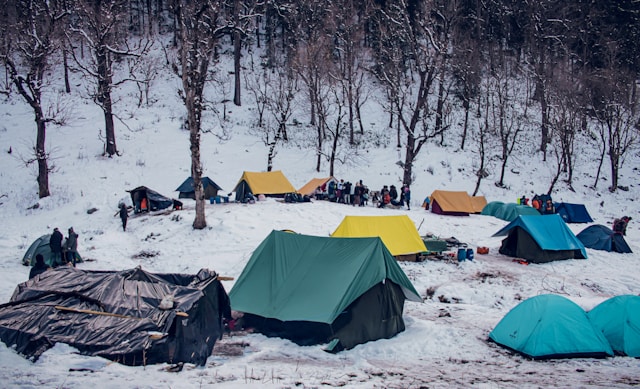
The standard Kedarkantha itinerary spans five to six days including travel. Here is what each day looks like on the ground.
Registered trek operators charge between ₹7,000 and ₹12,000 per person for a fully guided Kedarkantha package. This typically includes accommodation in tents or guesthouses, all meals on the trail, a certified guide, a support team, and basic safety equipment. Always choose an operator registered with the Uttarakhand Tourism Department and check their safety record before booking. Paying slightly more for a reputable operator is one of the most worthwhile investments you can make for this trek.
Travel: Delhi to Sankri by bus/train
The most common route is an overnight train from Delhi to Dehradun (Shatabdi, Jan Shatabdi, or Mussoorie Express) followed by a shared cab or bus to Sankri. Train tickets cost ₹300–₹800 depending on class, and the Sankri cab costs ₹600–₹800 per person in a shared vehicle. Some operators offer pickup from Dehradun railway station as part of their package. If you prefer door-to-door comfort, private taxis from Delhi to Sankri can be arranged for ₹8,000–₹12,000 per cab, split among four people.
Gear rental costs
If you don't own trekking gear, Sankri village has several small shops that rent out essentials at reasonable rates. Trekking poles rent for around ₹100–₹150 per day, gaiters for ₹50–₹100 per day, and microspikes or crampons for ₹100–₹200 per day in winter. Sleeping bags and jackets are also available. Renting a full winter kit for four days should cost ₹500–₹1,500 depending on what you need. Inspect rented gear carefully before heading out.
Budget vs. premium packages
Budget packages around ₹7,000–₹8,000 typically use basic dome tents, sleeping bags with modest insulation ratings, and minimal support staff. Premium packages at ₹10,000–₹12,000 offer insulated sleeping tents, higher-rated sleeping bags, better food, smaller group sizes, and more experienced guides. For winter treks especially, the difference in sleeping bag quality alone makes the premium package worth considering. First-time trekkers are better served by a more comfortable, well-supported experience than by saving a few thousand rupees.
Sleeping bags and jackets are also available. Renting a full winter kit for four days should cost ₹500–₹1,500 depending on what you need. Inspect rented gear carefully before heading out.
Budget tip
Book at least 6 weeks in advance to get early-bird rates. Many operators offer 10–15% discounts for groups of 4 or more trekking together.